


The Greater Bay Area, China: A World-Class City Cluster on the Pearl River Delta
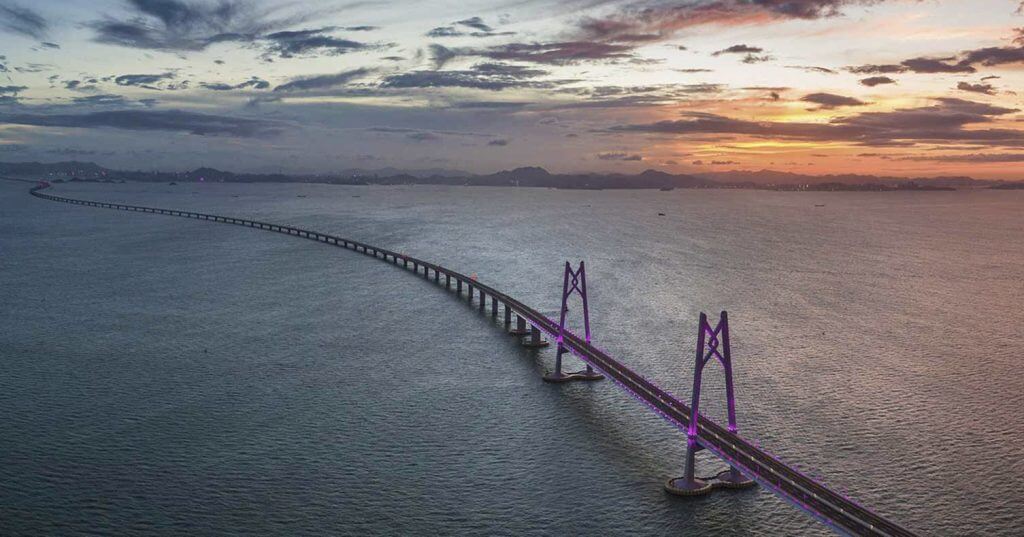
The Greater Bay Area (GBA) is an economic development plan aimed to develop a world-class cluster of 11 cities in the Pearl River Delta boasting a GDP of almost US$2 trillion, 86 million people, and a size of 56,000km².
The Greater Bay Area attaches great importance to coordinated regional development, emphasizing the advantages and strengths of each city.
The 11 mega cities being Tier 1: Hong Kong (Law and currency), Shenzhen (Tech hub), Guangzhou (Light manufacturing) and Macao (Entertainment) in their respective roles, supported by Tier 2: Dongguan, Foshan, and Tier 3: Zhuhai, Zhongsan, Jiangmen, Huizhou and Zhaoqing complement each other to create a world class leading technology and innovation centre for China and globally. GBA will also serve as the vehicle that will integrate Hong Kong with the mainland in a creative way. There are indications that the integrated area will have closed loop data exchange among them.
The blueprint under China’s current Five-Year Plan is to develop GBA into an integrated hub with an efficient infrastructure and conducive business environment (logistics, legal framework, work permits, taxation, company incorporations, stock exchange link up, etc.) to facilitate technology innovation and successful businesses.
GBA is situated in southern China surrounding the Pearl River estuary, hosting a high number of Fortune Global 500 companies including Tencent, Huawei, ZTE, DJI, BYD. GBA, led by Shenzhen, is the Silicon Valley of the East being an amazing nurturing hub of many successful startups in technology, biotech, medicinal technology, AI, robotics, and many other areas of innovation.
“The GBA will build more financial infrastructure based on various application scenarios of finance. These financial facilities will be conducive to the circulation of funds and resources in the GBA, and will play an important role in promoting the internationalization of the yuan and facilitating capital movements, investment and trade between Hong Kong, Macao and the Chinese mainland” — Wang Peng, a research fellow at the Beijing Academy of Social Sciences, told the Global Times.
Hong Kong’s Role
Hong Kong is known for its international standing on its legal, accounting, and banking services. With an independent currency pegged to the USD, these attributes allow Hong Kong to play a crucial role in the future development of the GBA. Hong Kong will perform well in its role to support China’s goal to innovate its foreign exchange regime including further expanding the offshore RMB market, cross-border RMB financing, new insurance products, cross border investment platforms for wealth management instruments, etc. Hong Kong is historically a effective financial and business gateway to the rest of China. The Hong Kong GBA Development Office has already in place policies to encourage startups and new businesses focusing on innovations and technology breakthroughs via the Hong Kong Science Park & Cyberports incubation programs.
Shenzhen — The Silicon Valley of the East
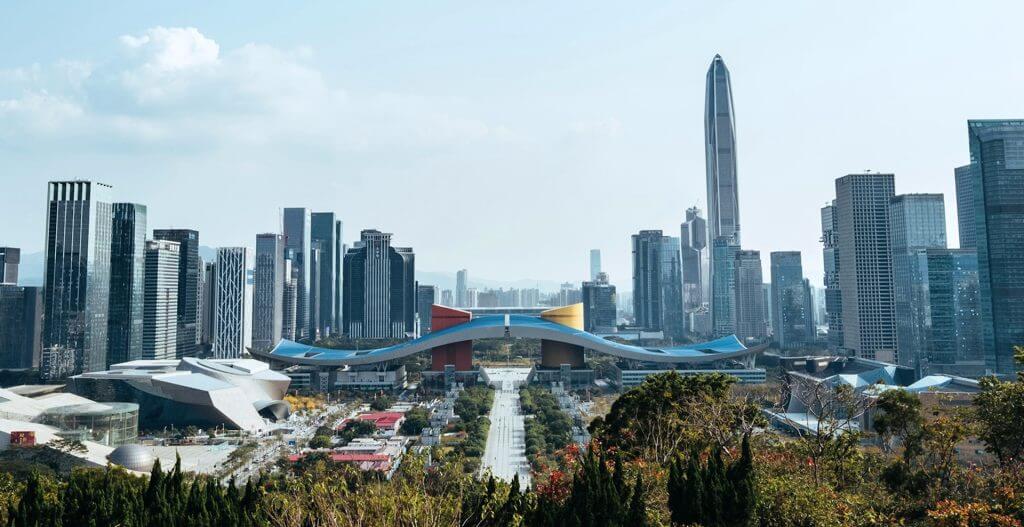
Shenzhen hosts a high number of Fortune Global 500 companies and is also the incubator base for startups and research. Shenzhen’s culture being a melting pot of migrants from all over China wishing to realise a dream makes the atmosphere very conducive to business successes. The city provides a skilled, innovative, eager, and young workforce and with its can-do attitude makes it an attractive hub for domestic and international businesses.
Nanshan district is the tech heart of Shenzhen, with a sprawling technology park that incubated many successes like Tencent, Huawei, DJI, etc. Futian is Shenzhen’s finance and business center. Lowu was historically a light assembly and sourcing district, and the area where the Shenzhen miracle began in 1979 when Deng Xiao Ping opened China to the world. Shenzhen: then a marshland and now a mega metropolis.
Qianhai Cooperation Zone
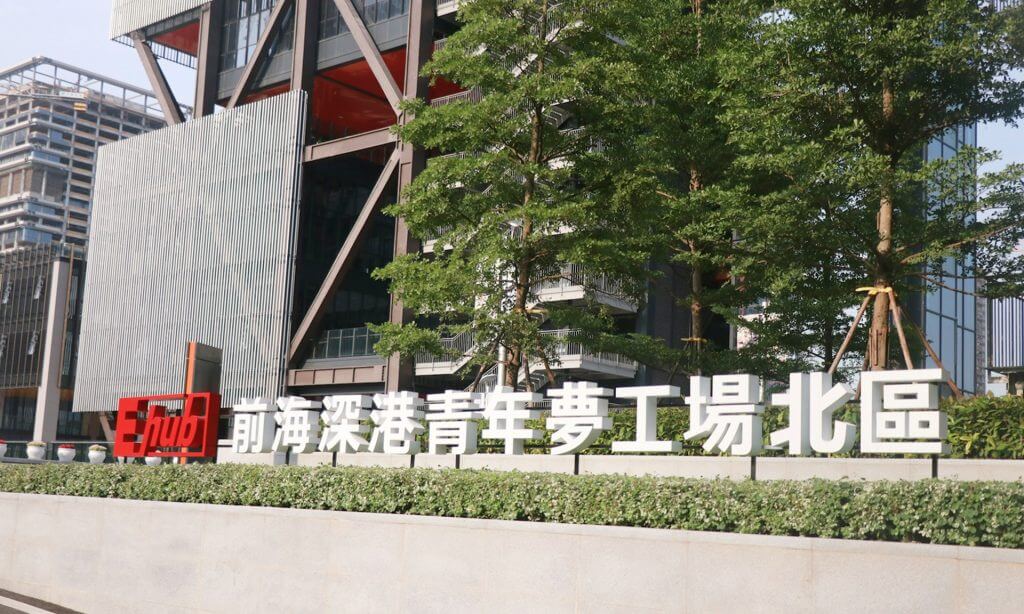
Qianhai Cooperation Zone is located in the southwestern part of Shenzhen and is a special area within Shenzhen Special Economic Zone in the Mainland. Qianhai was set up in 2010 with an area of 15 sq km, which has since expanded tenfolds. Qianhai offers corporate tax incentives including lower corporate tax rate of 15% for special industries (modern logistics, information and business services, science & technology, and cultural & creative industries), and lowered Individual income tax rates for qualifying employees.
Qianhai will be more than a hub for financial services, modern logistics, and technology businesses, it will be a testing ground for the further opening up of the financial industry (RMB lending & Wealth Management Connect schemes), modern logistics (more efficient system of goods clearance through the use of bonded warehouses), and capital market development (incentives for VCs and PEs).
Qianhai objective is to emulate Hong Kong on many facets within a Chinese system while Northern Metropolis tries to emulate Shenzhen under a common law system. We are assisting overseas clients to set up in Qianhai to take advantage of these incentives.
The Northern Metropolis & Lok Ma Chau Loop
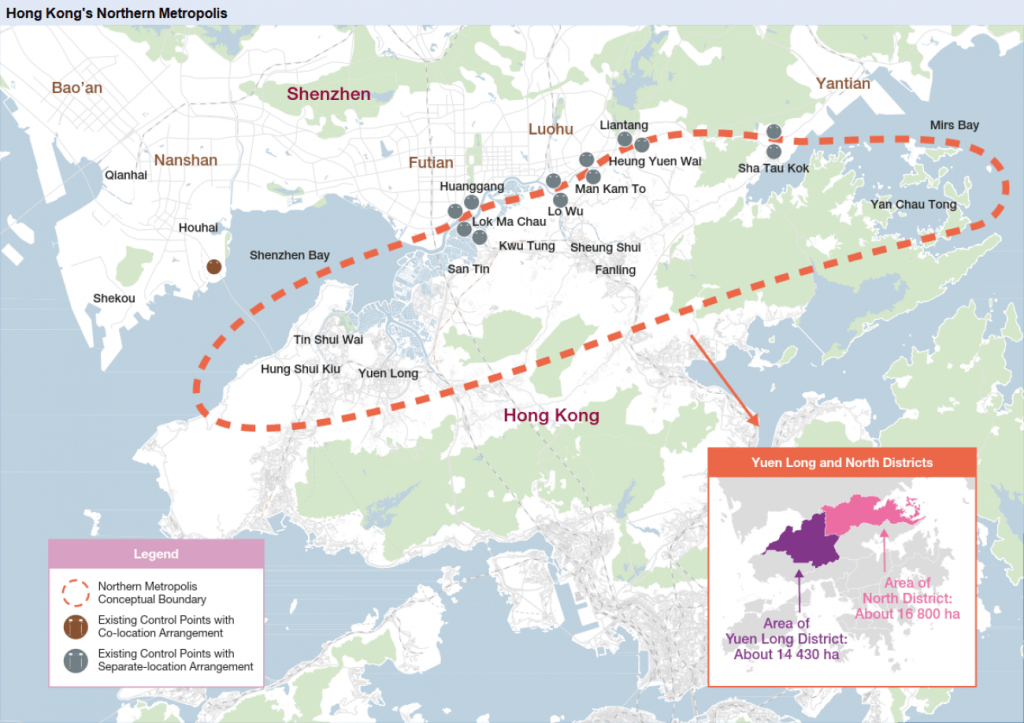
On the Hong Kong side, there’s also an equally exciting development in the area called Northern Metropolis, being nurtured to integrate more closely with Shenzhen.
The western part of the Northern Metropolis (covering Yuen Long, Tin Shui Wai, and Hung Shui Kiu/Ha Tsuen) will be linked with the Qianhai Cooperation Zone by rail to strengthen cooperation between the two places and create more jobs opportunities.
Lok Ma Chau Loop, located in the northeastern part of the Northern Metropolis, will be an area dedicated to new technology development and science innovation. Newly planned facilities operate by the HK Science Park will be in operation by 2024.
Come and explore the Greater Bay Area.