


An Update on Northern Metropolis
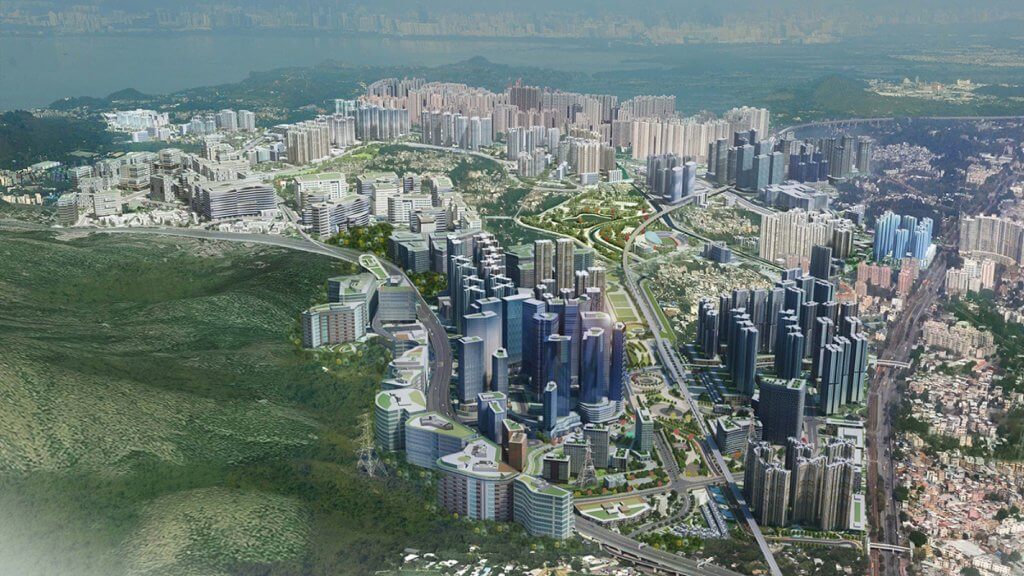
A major transformation is underway in Hong Kong, highlighted by plans to clear nearly 3,000 hectares of land near Shenzhen to develop the Northern Metropolis. This new zone, amounting to almost 30% of Hong Kong’s total land area, has been described as creating “a mini Hong Kong” right next to Shenzhen. The initiative features prominently in China’s 15th Five-Year Plan. Officials point out that while Hong Kong’s growth has long been concentrated in the southern coastal region, the northern areas near Shenzhen have remained mostly farmland and open land. The new effort aims to create a new city center northward, enabling Hong Kong and Shenzhen to operate more closely as integrated hubs.
The vision is clear: combine Shenzhen’s manufacturing and technology strengths with Hong Kong’s international legal standards and access to global capital. Where these assets once sat on opposite banks of the Shenzhen River, they will now operate as one integrated system. The shift is expected to impact not just locally but also shape broader price-setting and positioning across the Greater Bay Area.
For Shenzhen, the plan offers direct opportunities for connection and collaboration. Hong Kong has set aside 210 hectares in San Tin district for industries such as artificial intelligence, biomedicine, and new energy. This land is adjacent to leading tech clusters in Shenzhen, including Guangming Science City, Xili, and Shenzhen Nanshan tech parks—together forming a continuous high-tech corridor.
High-end services such as finance, law, design, and certification can find lower-cost locations in Hung Shui Kiu near Qianhai, fostering a belt of cross-border corporate headquarters. Transport integration will expand the shared living and working zone, while data pilots will create legal pathways for industrial and training data to flow. Mainland technology firms will have a clear route to establish international headquarters in the Northern Metropolis while continuing research and production in Shenzhen.
For Hong Kong, the project is intended to diversify its economic base. The city has traditionally relied on finance, property, and trade—sectors now seen as too narrow for sustained growth. San Tin Tech City alone is projected to generate US$32 billion in annual GDP and create more than 300,000 new jobs, positioning itself as a powerful new growth engine. Efforts are underway to harmonize regulations on both sides of the border, making it easier for people, goods, money, and data to flow freely. Pilot cross-border arrangements in the Hetao area could eventually expand to cover the whole Northern Metropolis. Hetao’s initiatives are the earliest, and include the expansion of the Hetao innovation base, talent recruitment by the national Hetao Academy, and ongoing work by firms such as Huawei. The overall outlook is organized into three levels: benefits for Shenzhen, benefits for Hong Kong, and joint outcomes.
Special Northern Metropolis legislation is planned, supporting streamlined approvals, cross-border standards, and joint construction. Other measures aim to attract 100,000 skilled professionals within the first 36 months, including below-market housing, international schools, and medical credential recognition. New financial initiatives include gold trading, digital asset platforms, and green bonds tied to carbon data.
Joint initiatives include five shared laboratories and 100 cross-border startups in the Hetao–San Tin zone, with a combined target output of HK$50 billion. The dual-headquarters corridor between Hung Shui Kiu and Qianhai aims to attract 50 companies with collective revenues of over HK$100 billion and cross-border tax arrangements.
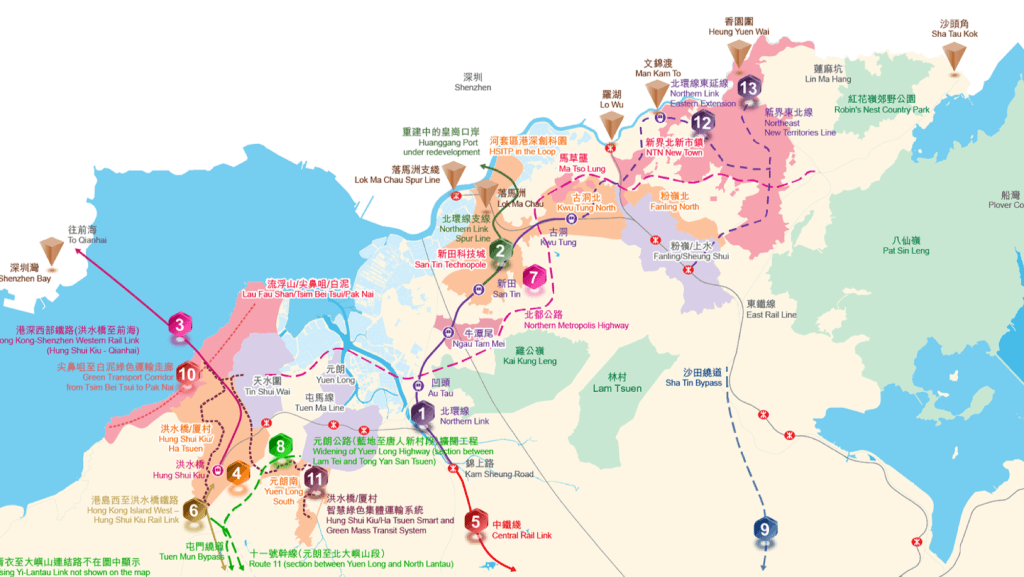
Transportation links are a vital part of the plan. The proposed Hong Kong–Shenzhen Western Railway will connect Hung Shui Kiu University area with Qianhai District in Shenzhen in just 15 minutes, placing the business districts of both cities within easy commuting distance.
The new western railway corridor is expected to spur a 45-minute innovation zone, boosting activity in real estate, spending, and job creation. Cross-border data arrangements are anticipated to support tens of billions in annual trade. Shared markets for gold, digital assets, and carbon finance are proposed—allowing Shenzhen’s production and Hong Kong’s pricing to set new standards for the region.
In conclusion, the Northern Metropolis is more than a city expanding north or another moving south. It represents the first full-scale alignment of land development, regulatory frameworks, industrial supply chains, and resource markets between Shenzhen and Hong Kong. This new zone will “fuse” China’s manufacturing backbone with common-law systems and global capital flows.