


Hong Kong’s Strategic Development: A Comprehensive Future Outlook
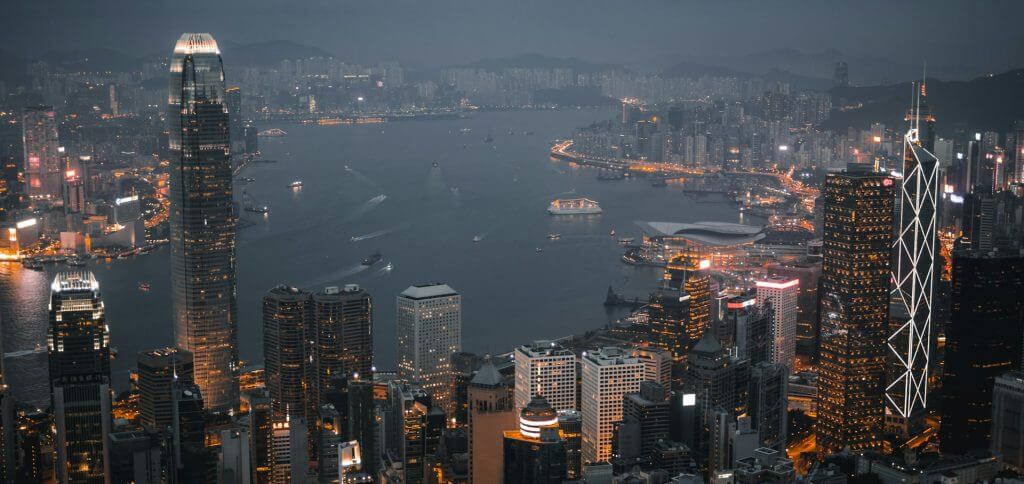
Hong Kong has outlined a robust vision for strategic growth and economic development, closely tied to China’s national priorities and regional advancements. With its unique “One Country, Two Systems” framework, the city remains a vital international hub, and its first Five-Year Plan highlights significant milestones and priorities to ensure sustainable growth and future alignment.
China’s 15th Five-Year Plan emphasizes Hong Kong’s integration into China’s broader national objectives, highlighting key areas of strategic focus. In education and technology, the plan aims to develop top-tier talent and foster innovation, establishing a tech-driven ecosystem to enhance global competitiveness. Social stability is prioritized through efforts to stabilize livelihoods and maintain a balanced housing market, reflecting a strong commitment to citizen welfare. Core governance is reinforced with an unwavering adherence to the “One Country, Two Systems” principle, safeguarding Hong Kong’s distinct legal and governance framework. As a global financial hub, Hong Kong continues to excel in IPO offerings, RMB internationalization, and commodities trading, including gold.
Hong Kong’s first Five-Year Plan presents a comprehensive roadmap for governance and economic development, aligning the city with national goals while preserving its unique attributes. On governance, the plan reinforces Hong Kong’s legal distinctiveness with an independent judiciary to maintain global confidence, enhances public safety, and promotes its position as a secure hub for investment and residency. Economically, it focuses on deepening financial markets, sustaining growth as a leading IPO venue with 119 IPOs in 2025 and aiming to exceed that in 2026, and strengthening human capital through the academic excellence of institutions like the University of Hong Kong.
As part of the Five-Year Plan, Hong Kong is focused on expanding its global influence through key priorities, including fostering innovation and technology to build advanced research ecosystems, strengthening cultural exchange to deepen global ties, enhancing its role as a leading hub for dispute resolution in legal services, and developing the city into a regional hub for buying, selling, licensing, and commercializing intellectual property—such as patents, copyrights, and trademarks—leveraging its legal, financial, and professional services to bridge Mainland China and global markets.
The Greater Bay Area
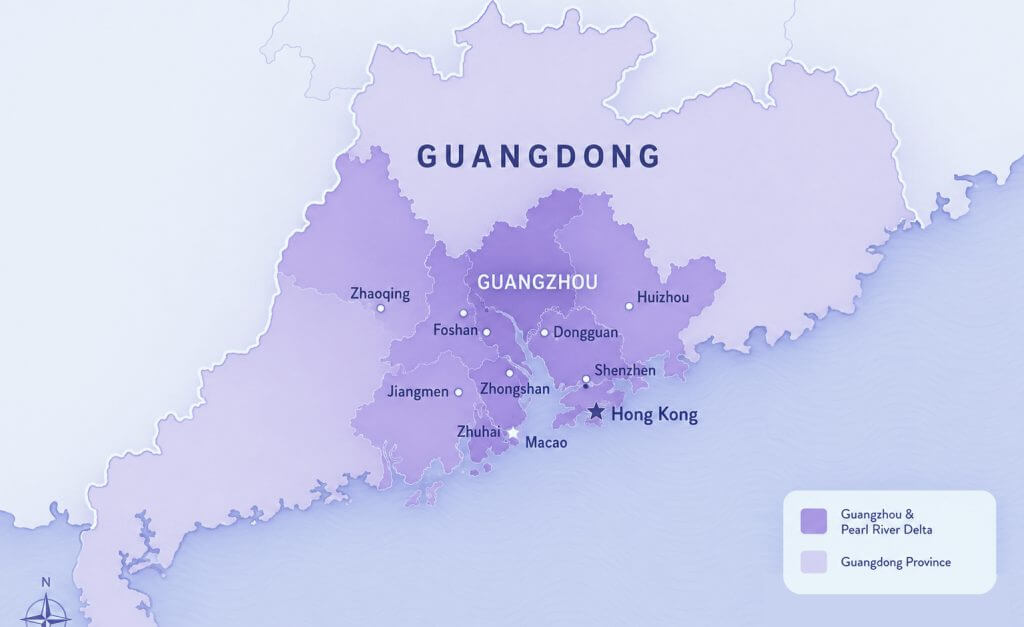
The Guangdong-Hong Kong-Macao Greater Bay Area (GBA) serves as a cornerstone of Hong Kong’s growth, boasting a world-class ecosystem comparable to global economic powerhouses like the San Francisco and Tokyo Bay Area. With 87 million residents and a GDP exceeding RMB 14.5 trillion in 2024, the GBA drives economic integration across financial, manufacturing, and tech sectors.
The Northern Metropolis
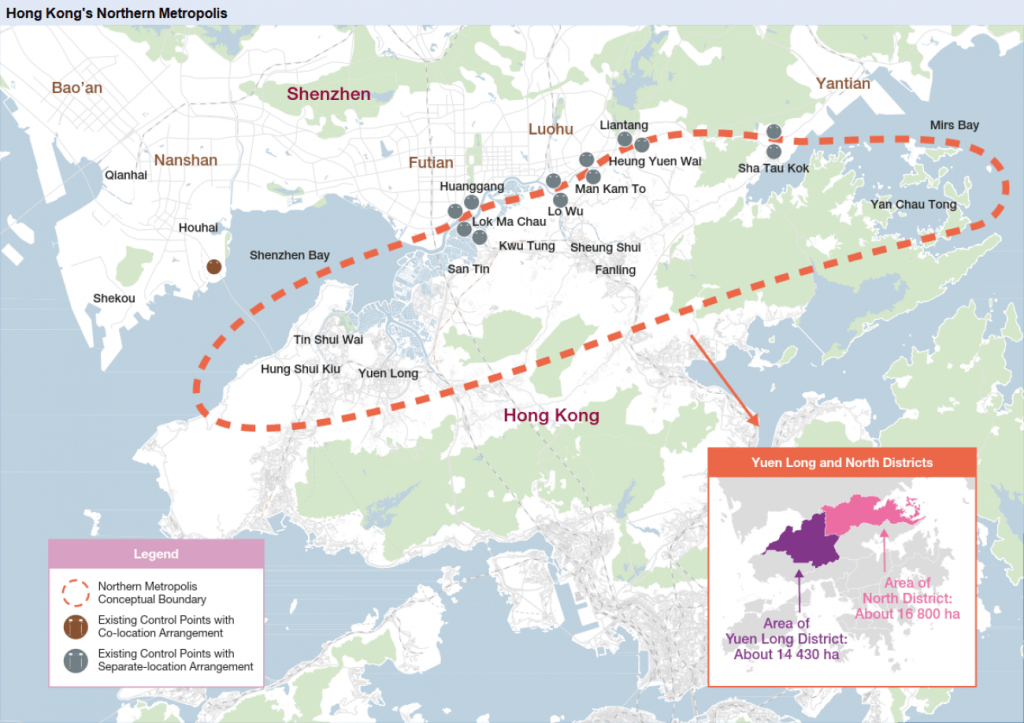
The Northern Metropolis is an ambitious development project in northern Hong Kong, aimed at transforming the region into a leading global hub for innovation and technology while deepening economic integration with Shenzhen, China.
A defining feature of the Northern Metropolis is its governance under Hong Kong’s legal system. The robust framework of common law provides strong protection for intellectual property rights across cutting-edge sectors such as technology, artificial intelligence, robotics, biotechnology, life sciences, pharmaceuticals, and other high-growth innovations—making the area especially attractive to international businesses and entrepreneurs.
Encompassing approximately 30,000 hectares—about a quarter of Hong Kong’s total land area—the metropolis will span key districts including Yuen Long, Tin Shui Wai, northern Tuen Mun, and Fanling–Sheung Shui. Its strategic position, adjacent to Shenzhen, enables seamless cross-border collaboration and the unrestricted flow of talent, capital, and technology.
The initiative is further supported by Hong Kong’s eight universities, which are recruiting top global talent to drive world-class research and innovation.
With a strong focus on sustainability, smart urban growth, and regional cooperation, the Northern Metropolis is poised to reshape Hong Kong’s northern border, reinforcing the city’s position as an economic powerhouse and innovation center. Notably, Hong Kong’s well-established IPO mechanisms provide attractive exit options for investors, further solidifying the metropolis’s appeal as a destination for technology investment and entrepreneurial success.
Conclusion
In conclusion, Hong Kong’s development roadmap firmly integrates its goals with Mainland China’s strategic outlook while preserving its unique global positioning. With the dual engines of the Greater Bay Area and the Northern Metropolis, Hong Kong is poised to strengthen its role as an international financial, technological, and cultural hub. Its commitment to innovation, global integration, and citizen well-being ensures a vibrant and sustainable future.